Contents
Building a Shopify store sounds simple at first. You pick a theme, upload your products, and you are ready to sell. But if you have been through the process before, you already know it doesn’t work exactly like that.
The real work starts when you need a store that is fast, easy to navigate, built to convert and set up correctly from the beginning. That is when most store owners start looking for a Shopify web development company to help them.
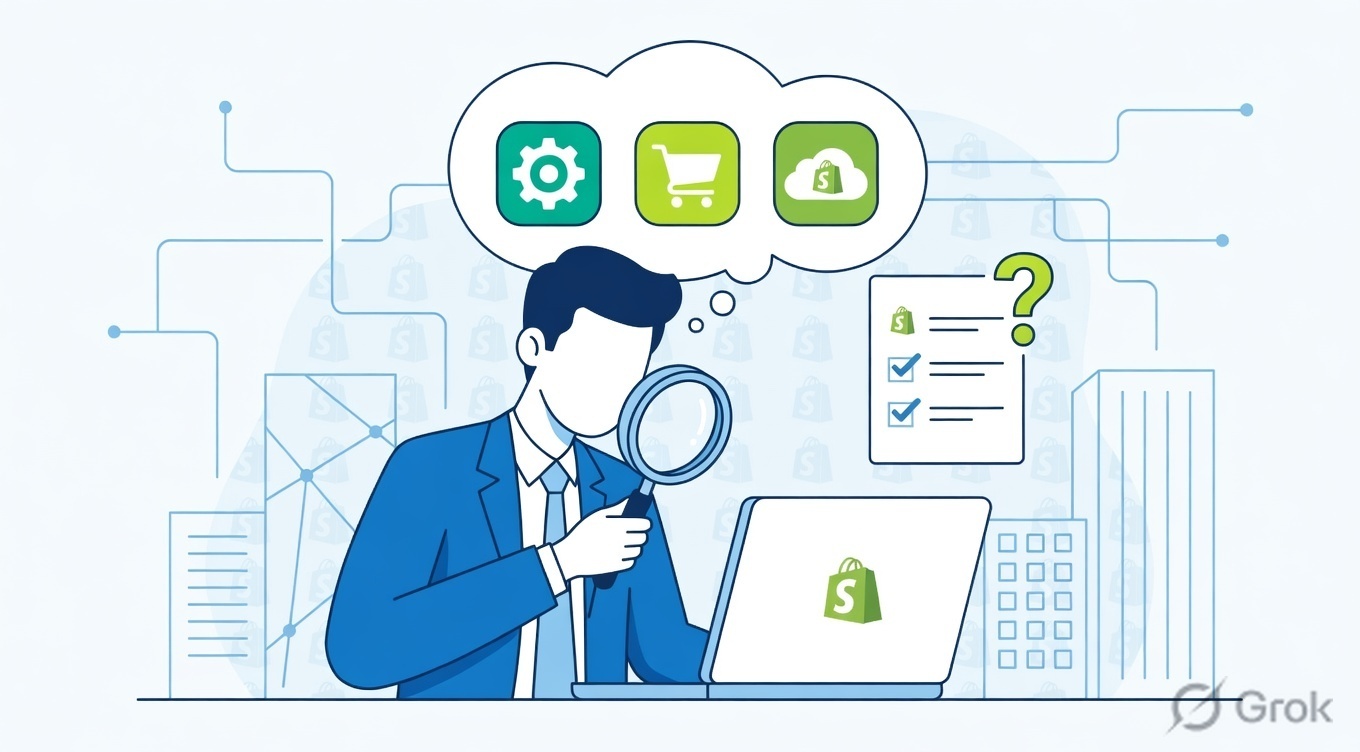
The problem is… there are hundreds of agencies and freelancers all claiming to be the best. So how do you figure out who is actually worth your money and who is just good at making promises?
This guide will solve that problem. Whether you are a first-time store owner or an established brand looking to migrate or rebuild, here is what to look for, what to ask, and what to avoid when choosing the right team for your Shopify store.
Why the Right Shopify Development Company Actually Matters?

There’s a widespread assumption that because Shopify is a beginner-friendly platform, any decent web developer can build something workable on it. That assumption costs businesses real money. Anyone can build something on Shopify. But there is a big difference between a store that is just built… and a store that is built to perform.
Shopify has its own ecosystem, its own templating language, its own app integrations, its own checkout constraints, and its own performance benchmarks. A developer who primarily works in WordPress or custom-built frameworks can technically produce a Shopify store… but they may not optimize the platform the way a Shopify specialist would.
Apart from the technical side, your Shopify website development agency also shapes your customers’ experiences. Page speed, mobile responsiveness, product discovery flow, cart behavior, checkout UX, and all the other technical aspects impact your conversion rate. A difference of 0.5% in conversion rate can translate into $10,000 annually for a mid-size volume store.
A poorly developed store can cost you sales in ways that are hard to trace.
What to Look for in a Shopify Development Company
Choosing a Shopify development partner is not just a technical decision; it’s a revenue decision. The right team pays for itself, and the wrong one costs you more than their invoice. Here are the things you need to check in order to make the right decision.
1. Proven Specialization in Shopify
The first thing to check is… does this company actually specialize in Shopify or do they just offer it as one of many services?
There is a big difference between a company that works on Shopify stores every day… and a company that builds websites on WordPress, Wix, Magento, and Shopify all at once. The second type can get the job done, but they are unlikely to know Shopify the way a specialist does.
Shopify has its own coding language called Liquid. It has its own way of handling product pages, collections, checkout, and apps. If a developer does not work in this environment regularly, they will make decisions that look fine on the surface but cause problems later. Things like slow page speeds, app conflicts, checkout errors, or a store structure that is hard to manage.
A company that specializes in Shopify will-
· Know how to build Shopify stores that are fast and well-structured from the start
· Understand how Shopify apps work together and which ones actually help your store
· Know the platform’s limitations and how to work around them properly
· Keep up with Shopify updates and changes so your store does not fall behind
So when you are talking to any Shopify web development company, ask them directly… how many Shopify stores have you built in the last 12 months? What percentage of your work is Shopify? Their answers will tell you a lot.
2. Check Portfolio and Case Studies
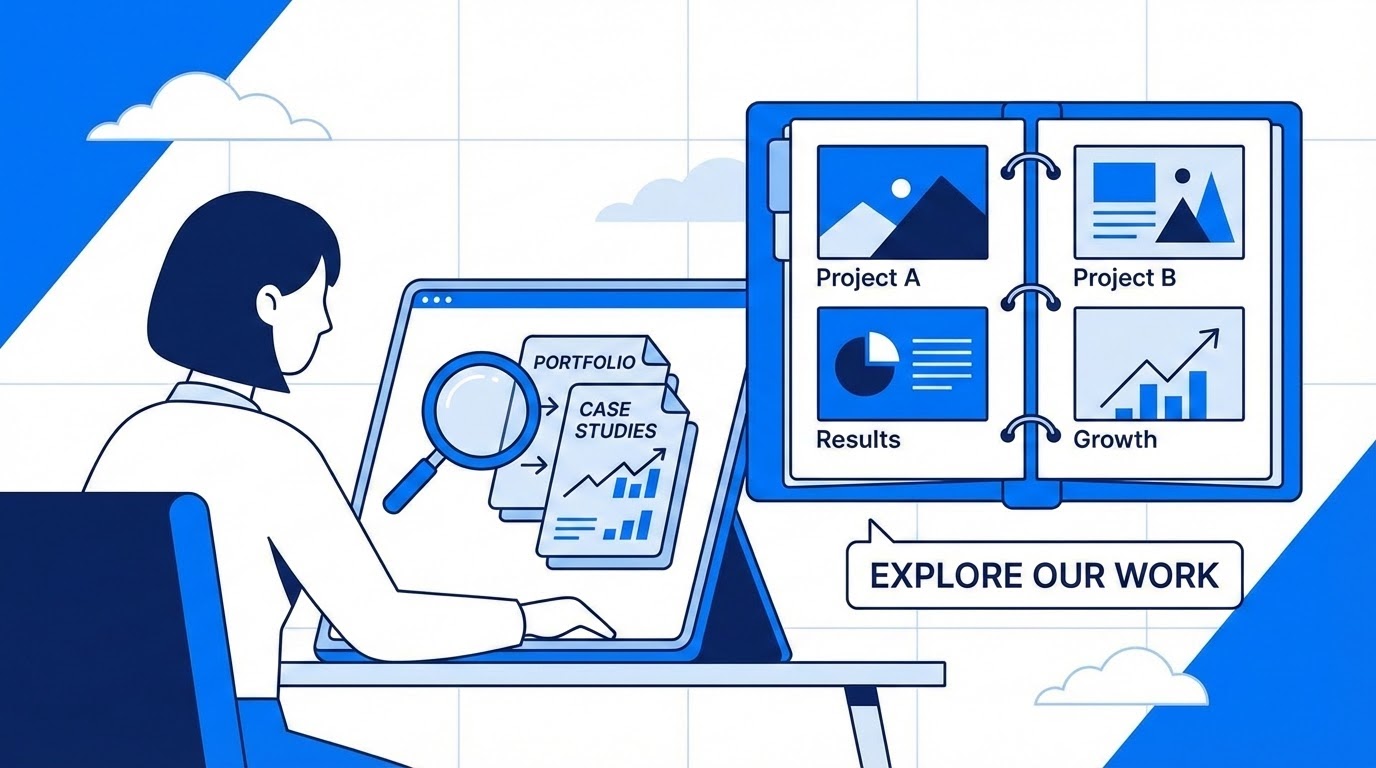
Every agency will send you their best-looking screenshots. Your job is to go further than what they share with you or put in front of you.
Visit the actual live stores they have built. Browse them as a real customer would. Click through the product pages. Try adding something to the cart. Check how the store looks and works on your phone. Notice if pages load quickly or if there is a noticeable delay.
Screenshots can hide a lot of problems. A store that looks great in an image might load slowly, have confusing navigation, or break on mobile. Visiting the live store gives you a much more honest picture of what the company actually delivers.
Also, look for variety in their portfolio. A company that has built stores across different industries and at different price points has likely dealt with more types of challenges and knows how to adapt.
Case studies go even deeper. A good Shopify development company will not just show you finished designs. They will explain the problem the client had, what they built, and what results followed. Look for case studies that include real outcomes… things like improvement in page speed, higher conversion rates, or growth in organic traffic. Numbers are more trustworthy than descriptions.
If a company only shares screenshots and no proven results, that is worth noting.
3. Technical Proficiency
You do not need to be a developer to check a company’s technical skills. You just need to ask the right questions and pay attention to how they answer.
A technically strong Shopify development team should be able to handle things like-
· Custom theme development– building or modifying store designs beyond what standard Shopify themes offer
· Page speed optimization– making sure your store loads fast, because slow stores lose customers
· App integrations– connecting your store with third-party tools like email platforms, ERPs, inventory systems, or review apps
· SEO setup– making sure the store is technically structured so search engines can find and index it properly· Mobile optimization– ensuring every part of the store works well on phones, not just desktop
Here is a way to test this. Describe a specific challenge you know your store will face… for example, managing hundreds of product variants, running a subscription model or integrating with your existing warehouse system. Then ask them how they would approach it.
A technically experienced team will give you a clear answer. They may not give you every detail on the first call, but they should be able to explain their approach in a way that makes sense to you. If they seem vague, change the subject quickly or give you a generic answer… that is usually a sign they do not have deep experience with that particular challenge.
4. Shopify Expert Certification
Shopify has an official partner program that recognizes agencies and developers who meet certain standards. Being a Shopify Partner or Shopify Plus Partner is not a guarantee that a company is perfect… but it is a useful signal.
To become a Shopify Partner, a company needs to go through Shopify’s verification process, meet activity requirements, and maintain a record of completed projects on the platform. Shopify Plus Partners work specifically with high-volume and enterprise-level merchants.
You can verify a company’s partner status directly on Shopify’s website. It takes about 30 seconds and clears any doubt. If a company claims to be certified but does not appear in Shopify’s partner directory, that is a red flag worth taking seriously.
5. Client Testimonials
Testimonials on a company’s own website are a starting point. But they are not the whole picture… because every company is going to show you only the feedback that makes them look good.
You can look for reviews on third-party platforms where the company cannot control what is said. Places like Google Reviews, Clutch, or Shopify’s own partner reviews are more reliable because the feedback is difficult to filter or remove. Check the feedback on communication during the project, delivery timelines, launch-related reviews andhow they handled problems
Did the company deal with them professionally, or did clients feel stuck? Reviews and testimonials will tell you everything, as every project has challenges.
6. Communication and Support
You can have the most technically talented team in the industry, but if they do not respond for weeks or reply to feedback with vague answers, the project will suffer.
During your initial conversations with any Shopify web development service provider, pay attention to how responsive they are, how clearly they explain technical concepts to a non-technical person, and whether they ask you detailed questions about your business to better understand or just jump straight to quoting you a price.
The tone of those early conversations is a preview of what working together will feel like. A team that communicates poorly when they are trying to win your business will communicate worse once the contract is signed.
Ask directly how projects are managed… do they use project management tools? How frequently will you receive progress updates? What’s the protocol if something goes wrong? Do not compromise on communication and transparency.
7. Understand Their Process
The best Shopify agency will not just create Shopify stores… they are strategic partners who invest time in understanding your business before writing a single line of code.
A development process starts with a discovery phase, like understanding your target audience, your existing brand, your competitors, and your specific conversion goals. From there, it moves into wireframes and design concepts before any development begins. This sequential approach will avoid frequent changes.
Ask how they handle feedback rounds, who your main point of contact will be, and how they manage scope changes. Projects that start without clear documentation almost always expand beyond budget and timeline. A company with a proper process will have answers ready for all of these questions.
Also, ask about their QA process. Do they test on multiple devices and browsers before handoff? Do they run performance audits? Is there a staging website URL where you can review the build before it goes live?
8. Post-Launch Support

Your Shopify store isn’t a static product. It needs updates, bug fixes, performance monitoring, new feature additions, and occasional troubleshooting. A company that hands over the keys and disappears is a liability, not a partner.
When evaluating candidates, ask specifically about what happens after launch. Do they offer retainer packages for ongoing maintenance? What’s their SLA (service-level agreement) for responding to critical bugs? Can they scale up support if you run a major campaign or flash sale that stress-tests the site?
The best Shopify development services include a post-launch period where the team monitors closely, addresses any issues that surface after real traffic hits the store, and hands off with thorough documentation, so your internal team can manage the basics independently.
Post-Launch Support Questions to Ask
· What does your post-launch support package include?
· How quickly do you respond to critical bugs?
· Will you provide training so our team can manage content updates?
· Do you offer monthly or quarterly performance reviews?· What’s your process for Shopify platform updates that might affect our store?
9. Budget Alignment
Budget is always part of the conversation, and it should be. But the way to think about it is not just “how much does it cost?” The better question is “what am I actually getting for this price, and is it worth it?”
Here is something that many store owners learn the hard way. Choosing the cheapest option often turns out to be the most expensive decision. A store built quickly with shortcuts will have problems like slow load times, poor mobile experience, conversion issues, or a structure that is hard to maintain. Fixing those problems later costs more than doing it right the first time.
At the same time, a high price does not automatically mean high quality. Some agencies charge premium rates without delivering premium results.
The best way to understand pricing is to ask for a customized proposal. A good Shopify website development company will be able to tell you exactly what you are paying for, not just a total number. The proposal should have-
· What is included in the design phase?
· How many rounds of revisions are covered?
· Is QA and testing part of the price?
· What does post-launch support include, and is it part of the project cost or an add-on?
When you compare two proposals side by side, you might find that the one that looks more expensive actually includes testing, post-launch support, and thorough QA… while the cheaper one stops at delivery. In that case, the “more expensive” option may actually be the better value.
Take Your Time, Ask the Hard Questions
Choosing the right Shopify web development company is not something you need to rush. It is one of the most important decisions you will make for your online business, because the team you choose will directly affect how your store performs and how many sales it generates.
Use this guide as your checklist. Look at real portfolios, verify certifications, read third-party reviews, check past work and results, and always get a clear breakdown of what you are paying for.
The right company will be easy to identify. They will be transparent, specific, experienced, and genuinely interested in understanding your business… not just closing a deal.
If you are looking for a team that ticks all of these boxes, Expert Village Media offers complete Shopify development services with a clear process, transparent communication, and a track record of stores that actually perform. Get in touch today and let’s talk about your project.
Ready to Build a Shopify Store That Actually Converts?

Amit Porwal
CEO and FounderAmit Porwal is the CEO and Founder of Expert Village Media and Wiser AI . He’s passionate about e-commerce, and loves helping Shopify store owners boost sales with upselling, cross-selling, digital marketing, & personalized shopping experiences. With years of experience in e-commerce web development Amit believes in building simple and effective online store that actually make a difference. He is always excited to talk about the power of personalization and how he can make e-commerce smarter and more customer-friendly with the help of AI.