

How Google AI Overviews Work (And How Content Gets Selected)
Contents
You can rank on page one and still not be the page users read. Because AI overviews can answer the question at the top of Google which means reducing clicks and changing what visibility means.
In 2026… Google is not just listing websites, for many searches, it’s summarizing the web and presenting an AI-generated snapshot at the top of the results. That changes the game for anyone who relies on organic visibility. You can still rank well and see fewer clicks, simply because the user got what they needed without visiting a page.
So the real question becomes is… How do Google AI Overviews work and how does Google decide which content gets included as supporting links?
This blog breaks it down. We will talk about – what AI overviews are, when they appear, what query fan-out means and what you can do to increase the chances of your content being selected… without chasing myths or hacks.
What Are AI Overviews, Exactly?
AI Overviews are Google’s way of giving searchers a fast, AI-generated summary right on the results page, especially when the question is complex, has multiple angles or would normally require opening several tabs.
Instead of showing only a list of links and making you bring everything together, Google tries to pull key points from multiple sources, combine them into a clear explanation and then provide links so you can explore the original pages for more detail.
You will usually see AI Overviews at the top of the search results. They may include-
- A short summary that addresses the question directly
- Bullet points or steps (depending on the query)
- Links to pages that support the information
- Sometimes images or product-style suggestions (depending on intent)
How AI Overviews are different from featured snippets
Featured snippets typically pull a short excerpt from one webpage like a highlighted answer box.
AI Overviews are different because they can synthesize information across multiple sources. That makes them more useful for-
- How does this work? type questions
- Comparisons (X vs Y)
- Multi-step tasks
- Topics where the user needs a big-picture understanding
How AI Overviews Are Different from AI Mode
Think of AI Overviews as a quick starting point, like a summary plus links.
AI Mode is more like a conversation; it’s designed for follow-up questions, deeper exploration, and longer research-style journeys. Google’s Search Central documentation explains that AI features can use different models and techniques, and the links shown may vary between experiences.
The key takeaway for marketers and site owners is simple- AI Overviews change what winning looks like. In many searches, visibility isn’t only about ranking; it’s also about whether your page becomes one of the sources Google chooses to support the overview.
When do AI overviews show up?
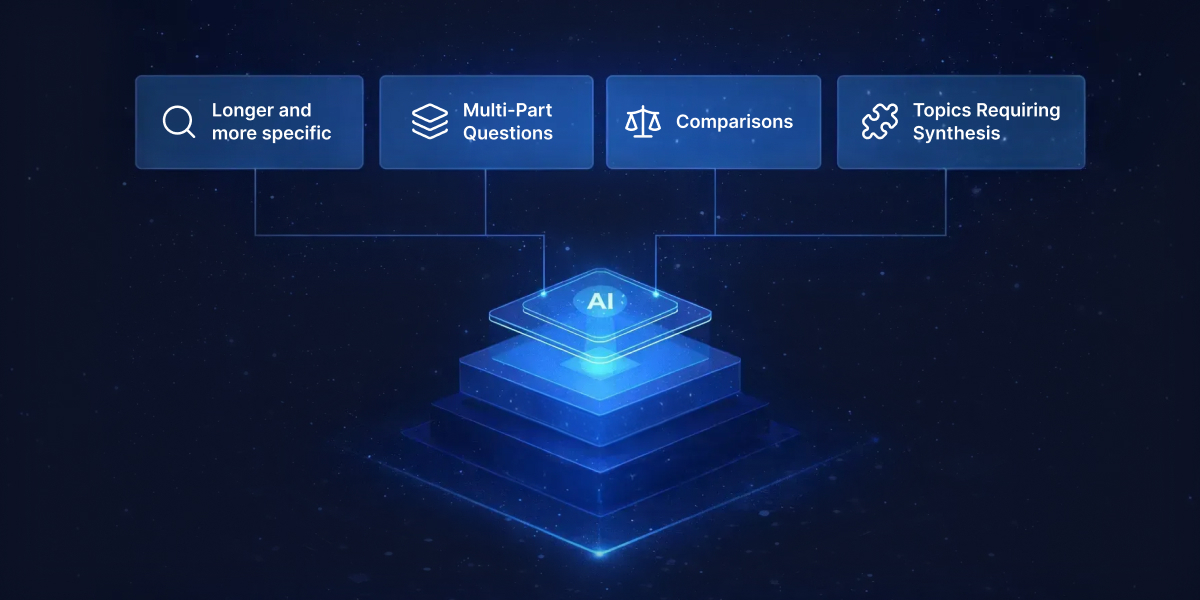
Google says you will see AI Overviews when its systems determine that generative AI can be especially helpful, such as when you want to quickly understand information from a range of sources.
That usually translates to searches that are-
- Longer and more specific
- Multi-part questions
- Comparisons
- Topics that require synthesis, not a single definition
Do Web Clicks Change When AI Summaries Appear?
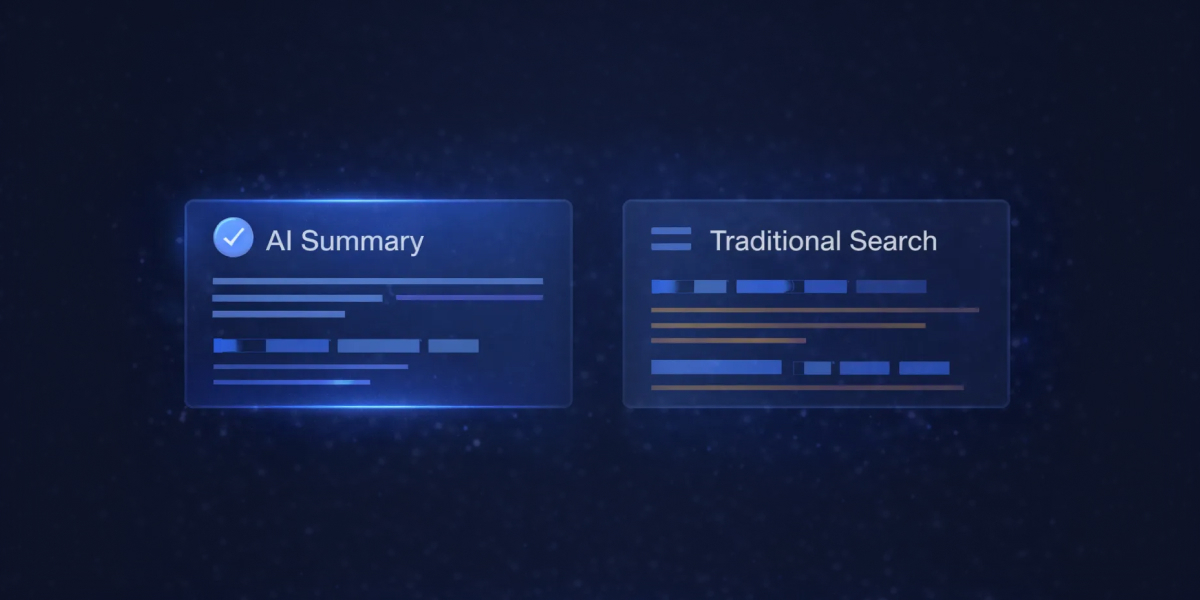
Pew Research analyzed browsing data from March 2025 and found that users who encountered an AI summary were less likely to click links than users who did not see one.
Search Engine Land summarized key numbers from that research, including that users clicked traditional results less often when an AI summary appeared.
The takeaway is not panic, it’s that.. visibility now includes being present inside the answer experience, not just ranking below it.
How Google AI Overviews Work
You do not need to know the full model architecture to understand the workflow. Here is the simplest way to think about it-
Google interprets the intent
It’s not only reading the query… it’s inferring what you actually want to accomplish. Example – best running shoes” vs “best running shoes for flat feet under $150”
Same category but totally different intent.
It expands the search with “query fan-out”
Google Search Central explicitly mentions that AI overviews and AI mode may use a query fan-out technique, which means issuing multiple related searches across subtopics and data sources to develop a response.
This is a major reason AI overviews can surface supporting pages that do not look identical to the classic top 10 results for the original query. The system is essentially exploring related angles while generating the answer.
It retrieves and corroborates information from Search
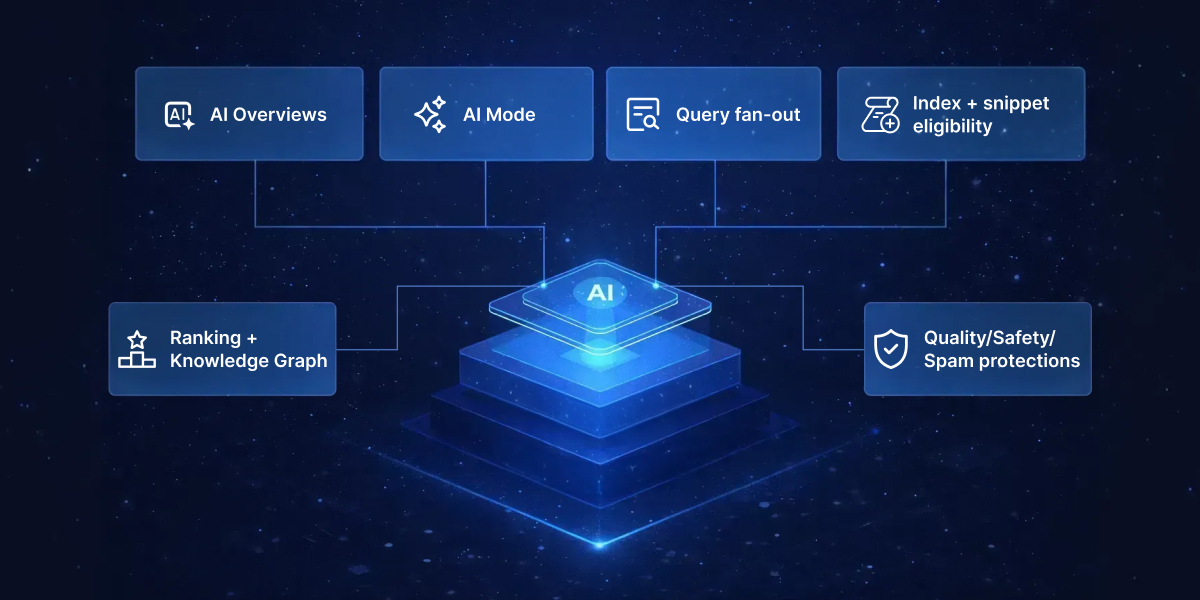
In Google’s own explainer PDF… it states that AI Overviews use a customized Gemini model working in tandem with existing Search systems (quality/ranking systems and the Knowledge Graph). It also says AI Overviews are designed to identify relevant, high-quality results from the index to corroborate what’s presented.
In simple terms, AI Overviews are built on top of Search, not separate from it.
It generates the overview and attaches supporting links
The same Google explainer emphasizes that AI Overviews aim to surface information backed up by top web results and include links supporting the information in the overview so people can explore perspectives on the open web.
Quality and safety systems help decide when not to show Overviews
Google notes that AI Overviews are rooted in Search quality and safety systems and describes safeguards like testing, corroborating results, safety guardrails, spam protections and triggering rules tied to when overviews should appear.
This matters when you select topics with higher risk (especially “Your Money or Your Life” queries), as Google sets a higher bar for supporting information and reliability.
And if you want to rank in AI Overview read our blog to get started – https://www.expertvillagemedia.com/how-to-rank-1-in-ai-overviews/
How Content Gets Selected for AI Overviews
Let’s understand this into two parts-
What Google explicitly says
What Google says- Google Search Central is very clear on eligibility. To be eligible as a supporting link in AI Overviews or AI Mode, a page must be indexed and eligible to be shown in Google Search with a snippet. There are no additional technical requirements.
That single statement answers a lot of confusion. It means-
- You don’t need special AEO schema to qualify
- You don’t need a secret AI Overview markup
- You do need to be crawlable, indexable and snippet-eligible
What likely increases selection (best bets that align with Search)
Because Overviews use Search systems and supporting web results, the same things that make a page a strong search result often help it become a strong supporting source, especially when formatted in a way that’s easy to extract.
Here are practical selection signals that usually help-
1. Direct relevance
If the overview is answering “how to do X,” your page should clearly answer “how to do X”… not 800 words of context before you get to the steps.
2. Clear structure (so it’s easy to pull from)
- Descriptive headings
- Short definitions
- Lists and steps
- Comparison tables
- FAQs that match real questions
3. Credibility signals (safe to cite)
- Clear author/brand ownership
- Accurate claims that are not exaggerated
- Up-to-date content especially in fast-changing topics
- Sources where appropriate
4. Strong snippet readiness
Remember: Google says snippet eligibility is a core requirement. (Google for Developers)
So anything that improves your chances of earning snippets can also improve your chances of being selected as a supporting link.
Selection Readiness Checklist
If you want a check before you update any page… run through these-
- Can Google crawl the page?
- Is it indexed?
- Does it deserve a clean snippet (clear answer… not vague)?
- Does it answer the question early and clearly?
- Is it written in a way that feels trustworthy?
If you cannot confidently say yes to the first three, you are not really in the AIO conversation yet, you are still in basic SEO foundations.
Myths Vs Reality (So You Don’t Waste Time)

1. Myth: You need special optimization just for AI Overviews
Reality: Google says you can apply the same foundational SEO best practices for AI features and that there are no additional technical requirements beyond index/snippet eligibility. (Google for Developers)
2. Myth: AI Overviews only cite the #1 ranking page
Reality: Because of query fan-out, AI Overviews may surface a wider and more diverse set of supporting pages than a classic search. (Google for Developers)
3. Myth: “You can hack your way into AI Overviews”
Reality: The safest long-term path is making content clear, helpful and technically eligible, then building topical authority over time.
What You Can Do to Improve Your Chances
If you’re aiming for more visibility in AI Overviews, focus on what’s actually within your control.
1. Write “answer-first” openings
Put the direct answer in the first 100–150 words. Then expand.
2. Add “answer blocks” inside your best pages
These sections perform well for both humans and machines-
- Quick definition
- Short bullet summary
- Step-by-step section
- Comparison table
- FAQ section with real questions
3. Make pages easier to extract from
- Short paragraphs
- Headings that match questions
- Lists where steps/criteria matter
4. Strengthen trust signals
Google emphasizes quality and safety protections, corroborating web results, anti-spam systems and higher standards on certain topics. So do not treat credibility as optional.
5. Build internal connections (this is where clustering wins)
If you want Google to understand “conceptual relationships,” internal linking is one of your strongest levers.
For example, Google AI Overviews content naturally relates to:
- AEO (Answer Engine Optimization)
- Query fan-out
- Snippet eligibility
- E-E-A-T / trust signals
- FAQ schema (when used properly)
- Tracking visibility and citations
A strong cluster makes it easier for Google to see you as a reliable source across the topic, not just one isolated article. And all these steps will help you rank on top in AI Overviews.
Key Concepts Map (Helps Readers and Search Engines)
Here’s the relationship in one place-
- AI Overviews – AI-generated snapshot + supporting links
- AI Mode – deeper conversational exploration (can connect with AI Overviews)
- Query fan-out – multiple related searches to build the response + broader supporting links
- Index + snippet eligibility – baseline requirement to appear as a supporting link
- Ranking + Knowledge Graph – core Search systems used alongside the model
- Quality/Safety/Spam protections – influence when Overviews trigger and what sources are safe
The Real Shift Isn’t AI, It’s Selection
Google AI Overviews do not reward AI tricks. They reward clear, trustworthy, snippet-ready content that Search can crawl, index and confidently support with links.
- AI Overviews appear when Google believes they are especially helpful.
- They may use query fan-out to explore subtopics and show a broader set of supporting pages.
- Your page needs to be indexed and snippet eligible to be considered as a supporting link.
And here is the question worth sitting with… When Google answers your customer at the top of the page… will it point to you as a source or to someone else? Do not think much.. just start working in the right direction. And we hope this blog helps you with that!

Amit Porwal
CEO and FounderAmit Porwal is the CEO and Founder of Expert Village Media and Wiser AI . He’s passionate about e-commerce, and loves helping Shopify store owners boost sales with upselling, cross-selling, digital marketing, & personalized shopping experiences. With years of experience in e-commerce web development Amit believes in building simple and effective online store that actually make a difference. He is always excited to talk about the power of personalization and how he can make e-commerce smarter and more customer-friendly with the help of AI.

 US Office
 INDIA Office
Recent Posts