

How to Start an Online Jewelry Business with Shopify: A Complete Step-by-Step Guide
Contents
The Online Jewelry Market Is Wide Open! Are You Ready?
There is something about jewelry that never goes out of style. People buy it to celebrate milestones, express themselves, gift the ones they love and sometimes just because a piece defined them. That emotional connection is exactly why the online jewelry market keeps growing even when other retail categories slow down.
According to Grand View Research, the global jewelry market was valued at over $353 billion in 2023 and is projected to grow at a compound annual rate of around 5.5% through 2033. A significant chunk of that growth is being driven by online sales, with eCommerce jewelry revenue in the United States alone expected to surpass $19 billion by 2027.
What’s interesting is that this market is no longer dominated only by big brands. Independent jewelers, artisan designers and niche sellers have found great success online, sometimes rivaling larger players because the internet lets you reach exactly the right buyer, no matter how specific your style or audience is.
But here is the catch… jumping in without a plan is where a lot of new sellers stumble. Choosing the wrong platform, skipping brand-building work, or failing to optimize product listings… all cost them time and money that could have been avoided.
That’s what this guide is all about how to start jewelry store online. Whether you are starting from scratch or have been selling offline and want to build an online presence, this step-by-step walkthrough will help you set up a proper online jewelry business on Shopify, one of the most trusted eCommerce platforms in the world.
Before You Start, Plan Your Jewelry Business
A lot of new sellers jump straight into creating a website. That is exciting, but it can also lead to confusion later.
Before you choose a theme or upload your first product, you need to answer some basic business questions. These decisions will shape your branding, pricing, product pages, photography, marketing and even your shipping policy.
1. What type of jewelry will you sell?
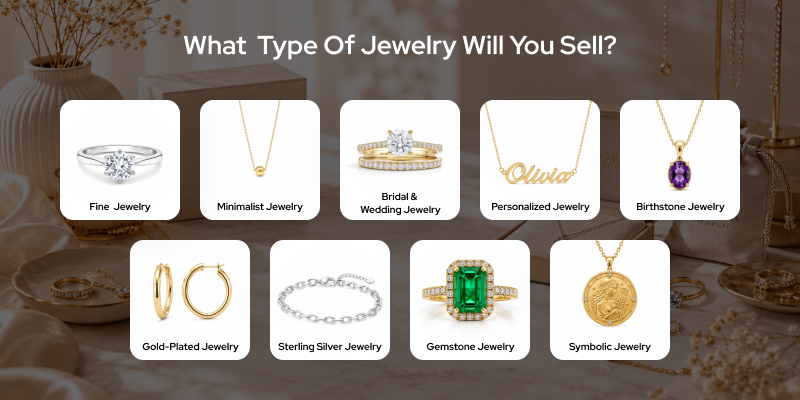
The jewelry market is broad. Trying to sell everything to everyone usually makes your store feel generic. A focused niche helps customers understand your brand faster.
Some popular jewelry niches include-
- Fine jewelry
- Handmade jewelry
- Minimalist jewelry
- Bridal and wedding jewelry
- Personalized jewelry
- Birthstone jewelry
- Gold-plated jewelry
- Sterling silver jewelry
- Gemstone jewelry
- Sustainable or ethically sourced jewelry
- Men’s jewelry
- Affordable fashion jewelry
- Luxury jewelry
- Spiritual, zodiac or symbolic jewelry
You can also niche down by style, audience, occasion or material. For example… minimalist gold-plated jewelry for everyday wear is much clearer than women’s jewelry.
2. Who is your ideal customer?
Your target audience affects everything. A college student buying trendy $25 earrings has different expectations than a bride shopping for a $1,500 wedding set.
Think about-
- Age group
- Gender or style preference
- Budget
- Lifestyle
- Shopping habits
- Gifting behavior
- Favorite social platforms
- Common objections before buying
- Reasons they buy jewelry
For example… if your audience buys jewelry as gifts, your store should highlight gift packaging, delivery dates, size guidance and easy returns. If your audience buys fine jewelry, your product pages should include material details, certifications, care instructions and strong trust signals.
3. What makes your jewelry different?
Jewelry is emotional. Customers are not just buying metal, stones or beads. They are buying identity, memory, confidence, beauty, status or meaning.
Your difference could be-
- Handmade craftsmanship
- Custom engraving
- Ethical sourcing
- Affordable luxury
- Unique cultural inspiration
- Premium materials
- Better packaging
- Fast delivery
- Limited-edition collections
- Strong brand storytelling
If you cannot clearly explain why someone should buy from you, your customers will struggle to understand it too.
Why Shopify is the Smartest Choice for an Online Jewelry Store
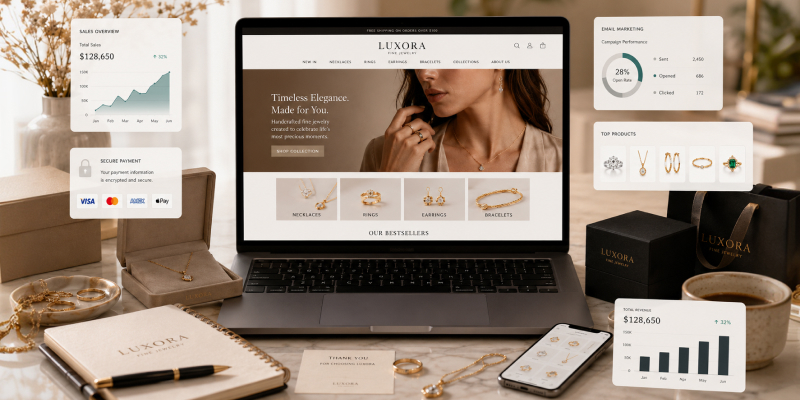
Before we start the steps and setup process, let’s first understand the platform. There are several eCommerce options out there WooCommerce, BigCommerce, Squarespace, Wix… so why does Shopify consistently come out on top for jewelry businesses specifically?
1. It is beginner-friendly
If you are starting your first ecommerce business, Shopify makes the setup process easier. You can add products, create collections, customize your storefront, set prices, manage orders and connect payment options from one dashboard.
This matters because most new jewelry business owners are already handling product design, sourcing, packaging, customer service, social media and marketing. You do not need a complicated backend slowing you down.
2. It supports beautiful visual stores
Jewelry is a visual product. Your website needs large product images, clean layouts, lifestyle photos, close-up shots and smooth mobile browsing.
Shopify themes are designed for ecommerce, which means they usually include product galleries, collection pages, filters, carts, checkout flows and promotional sections. With the right theme and photography, your store can look polished without building everything from scratch.
3. It has secure checkout and payment options
Trust is a big part of selling jewelry online. Customers want to know their payment information is safe and their order will be handled professionally.
Shopify offers a secure checkout experience and supports multiple payment options. The platform is also Level 1 PCI DSS compliant, which helps protect payment data. That is especially important for jewelry stores, where average order values can be higher than in many other retail categories.
4. It grows with your business
You might start with 20 products, but later expand into hundreds of SKUs, multiple collections, wholesale, international selling, retail pop-ups or custom product options.
Shopify can support that growth. A new jewelry brand can start with a standard Shopify plan, while larger or more complex businesses can move to Shopify Plus when they need enterprise-level features, advanced checkout customization, higher-volume support, or deeper automation.
For most new jewelry businesses, Shopify is enough. Shopify Plus is usually better for larger brands with businesses generating over $1 million in annual revenue.
5. It connects with marketing and sales channels
Shopify connects with tools for email marketing, reviews, loyalty programs, social selling, SEO, analytics, shipping, product sourcing, upsells and customer support.
This is useful because selling jewelry online does not end when your website goes live. You need traffic, trust, repeat buyers and customer relationships.
Your Complete Shopify Jewelry Store Setup Guide
Now let’s talk about how to start jewelry store online and look at the actual process of building your jewelry business on Shopify.
Step 1: Define Your Jewelry Niche and Target Audience
Your niche is the specific corner of the jewelry market you want to own. Do not choose your niche only because it is trending, choose it because there is customer demand, room for your brand and a product angle you can support consistently. For example-
- Instead of rings, choose minimalist stacking rings for everyday wear.
- Instead of bracelets, choose personalized bracelets for bridesmaids and gifting.
- Instead of luxury jewelry, choose modern demi-fine jewelry for working women.
Once you define your niche, create a simple customer profile. Ask-
- Who is this person?
- Why do they buy jewelry?
- What price range feels comfortable to them?
- Are they buying for themselves or someone else?
- What style do they like?
- What makes them hesitate before buying?
- What type of content would help them trust the brand?
This will help you write better product descriptions, choose better images, plan collections and create marketing that speaks to buyers.
Step 2: Research Competitors and Market Trends
Competitor research is not about copying other jewelry stores. It is about understanding what customers already respond to and where you can do better. Make sure you study-
- Bestselling product types
- Pricing ranges
- Website design
- Product photography style
- Customer reviews
- Return policies
- Shipping offers
- Social media content
- Influencer partnerships
- Packaging and unboxing experience
- Email popups and welcome offers
Look at direct competitors and larger jewelry brands. Read their product reviews carefully. Reviews often reveal what customers love, what they dislike and what they wish the brand offered.
For example… customers may complain about unclear sizing, slow shipping, tarnishing, poor packaging or product photos that look different from the real item. These are opportunities for your store to build trust.
You should also watch jewelry trends. Some useful places to research-
- Etsy for handmade and artisan jewelry trends
- Pinterest is incredibly useful for visual trend research
- Google Trends to see search interest over time
- Instagram and TikTok are where jewelry brands debut new styles
- Amazon for best-sellers and customer reviews in your category
You are looking for gaps where demand exists but competition has not fully served it, and you are also checking what’s already working so you can learn from it rather than reinvent the wheel.
Step 3: Create a Strong Brand Identity
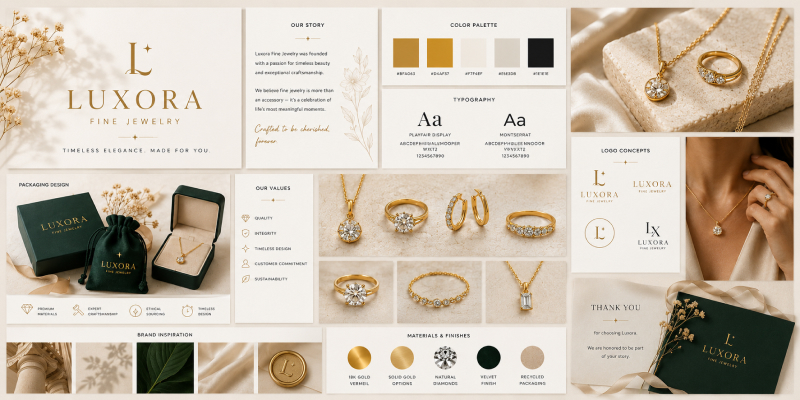
Jewelry brands need feeling. Your brand identity should make customers understand your style within seconds. A luxury jewelry store should not feel like a discount marketplace. A playful beaded jewelry brand should not look like a corporate fine jewelry retailer.
Build your brand identity around brand name, logo, color palette, typography, photography style, packaging, product naming, tone of voice, brand story, mission or values and customer promise.
Your brand story does not need to be dramatic, it just needs to feel real. Maybe you started designing jewelry because you could not find affordable quality pieces. Maybe your designs are inspired by travel, culture, architecture, nature or personal milestones. Maybe your brand focuses on slow-made pieces instead of mass production.
The goal is to give customers a reason to remember you.
Step 4: Decide on a Name and Buy a Domain
Your jewelry business name should be simple, memorable and easy to spell.
Avoid names that are too long, too trendy or too close to another brand. Before you commit, check-
- Domain availability
- Social media handle availability
- Trademark conflicts
- Search results for similar names
- Spelling and pronunciation
- Whether the name still works if your product line expands
Once you choose a name, buy a domain. A custom domain looks more trustworthy than a default store URL. Ideally, use a .com domain if available.
For example, yourbrand.com looks more professional than yourbrand.myshopify.com.
Step 5: Set Up Your Shopify Store
This is where your Shopify jewelry store setup begins. Create your Shopify account, add your business details, and choose the plan that fits your business.
For most new jewelry businesses, a standard Shopify plan is the better starting point. You get the tools needed to build, launch and manage an online store without paying enterprise-level costs. Your basic setup should include-
- Store name
- Business address
- Currency
- Time zone
- Tax settings
- Shipping zones
- Payment methods
- Checkout settings
- Customer accounts
- Store policies
- Domain connection
- Email notifications
Also create your key website pages like Home, Shop, Collections, About Us, Contact, FAQ, Shipping Policy, Return Policy, Privacy Policy, Terms of Service, Jewelry Care Guide and Size Guide.
For jewelry stores, the size guide and care guide are especially important. They reduce customer confusion and help protect the product after purchase.
Step 6: Choose Between a Free Theme and a Paid Theme
A theme controls how your Shopify store looks and functions. For jewelry, the best theme is usually clean, visually appealing, fast and easy to shop on mobile. Shopify provides both free and paid themes.
- Free Shopify themes
A free theme is a smart choice if you are launching with a small budget. Shopify’s Dawn theme is a good example because it uses a minimalist design and allows product images to stand out.
- Paid Shopify themes
Paid themes usually offer more design flexibility, built-in sections, advanced filtering, promotional blocks, lookbooks, quick view, product badges and stronger collection layouts.
You can choose the theme based on your business requirements and budget.
When choosing the best Shopify themes for jewelry stores, do not judge by design alone. Check-
- Mobile experience
- Product image gallery
- Collection filters
- Page speed
- Customization options
- Review rating
- Support quality
- Built-in sections
- Cart experience
- Compatibility with Shopify Online Store 2.0
A beautiful theme that loads slowly or makes products hard to browse will cost you sales.
Step 7: Add and Optimize Jewelry Products
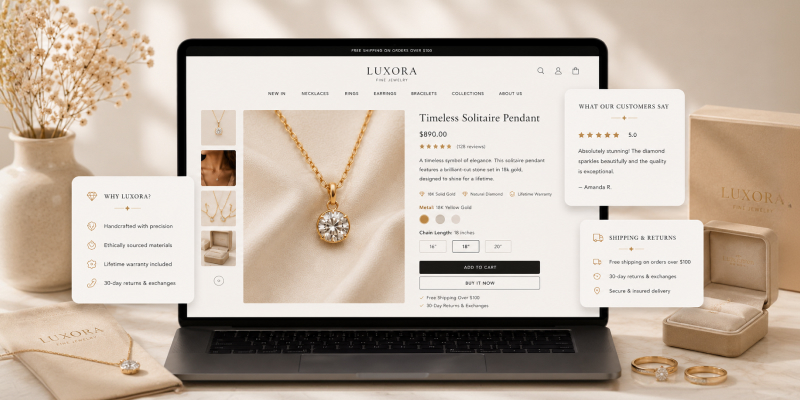
Your product pages are where browsing can actually turn into buying.
Jewelry customers want to see the piece clearly, understand the material, imagine how it looks when worn and feel confident that the store is trustworthy.
Each product page should include-
- Product name
- Clear price
- High-quality images
- Lifestyle images
- Close-up detail shots
- Material information
- Size or length
- Weight, if relevant
- Stone details
- Plating or metal type
- Hypoallergenic details, if applicable
- Care instructions
- Shipping timeline
- Return policy summary
- Customer reviews
- FAQs
- Trust badges
- Styling suggestions
Product photography tips
Use multiple images for every product like Front view, Side view, Close-up, On-model shot, Scale reference, Packaging image and Lifestyle image.
Jewelry is often small, so customers need visual context. A necklace on a plain background is useful, but a necklace worn by a model helps customers understand length, size and styling.
Product description tips
Do not write generic descriptions like- Beautiful gold necklace for women. Perfect for all occasions.
Instead, write descriptions that answer buying questions. Let me help you with an example- Designed for everyday wear, this 18k gold-plated necklace features a delicate 16-inch chain with a 2-inch extender, making it easy to layer with your favorite pieces. The lightweight finish sits comfortably on the collarbone and works well for office looks, weekend outfits and thoughtful gifting.
That tells the customer what it is, how it fits, how to wear it and why it is useful.
Step 8: Set Up Secure Payments and Shipping
Payments and shipping can make or break customer confidence.
Payment setup
Offer payment methods your audience already trusts. This may include-
- Credit and debit cards
- Shop Pay
- PayPal
- Apple Pay
- Google Pay
- Buy now, pay later options, if relevant
Make sure your checkout is simple. Avoid unnecessary steps. Jewelry is often an emotional purchase and friction at checkout can cause abandoned carts.
Shipping setup
Your shipping policy should be clear and visible. It should have all the details related to Processing time, Shipping methods, Estimated delivery time, Domestic shipping cost, International shipping cost, Free shipping threshold, Tracking information, Lost package policy, Duties and taxes for international orders and Return and exchange rules
For jewelry, packaging also matters. Customers expect the product to arrive safely and beautifully. Use protective packaging, branded boxes or pouches and care cards if your budget allows.
A good unboxing experience can encourage social media shares and repeat purchases.
Step 9: Add Essential Shopify Tools and Apps
Shopify works well out of the box, but apps can help you improve marketing, trust, customer experience and operations.
Do not install too many apps at once. Too many apps can slow your store, create conflicts and increase monthly costs. Start with essentials like-
- Product reviews
- Email and SMS marketing
- SEO
- Image optimization
- Wishlist
- Loyalty and rewards
- Product options
- Custom engraving or personalization
- Size guides
- Product bundles
- Upsells and cross-sells
- Shipping and tracking
- Returns management
- Live chat
- Fraud prevention
- Analytics
For example, a jewelry store selling personalized necklaces may need a product options app. A store selling giftable bracelets may benefit from tools for wishlists, gift wrap and email automation.
Choose apps based on your business need, not because they are popular.
Step 10: Optimize for SEO and Mobile Users
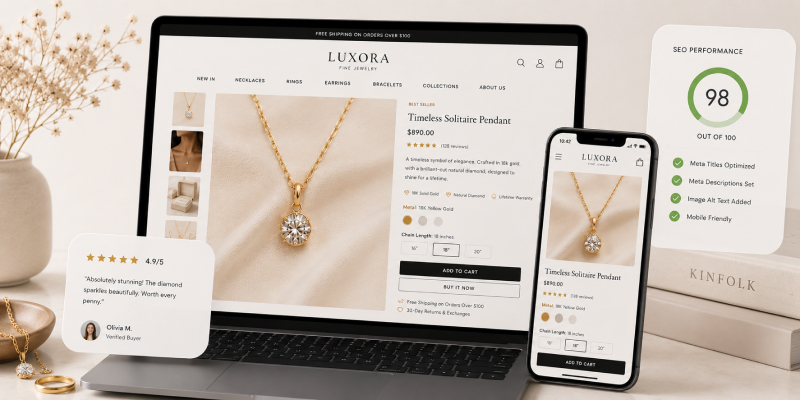
If you want customers to find your store through Google, SEO needs to be part of your setup from the beginning.
Shopify lets you edit SEO titles and meta descriptions for products, collections, pages, blogs and other resources. Use this feature to make your pages clearer for search engines and shoppers.
Basic Shopify SEO checklist for jewelry stores
Optimize:
- Homepage title and meta description
- Collection page titles
- Product page titles
- Product descriptions
- Image alt text
- URL handles
- Internal links
- Blog content
- FAQs
- Schema where possible
- Page speed
- Mobile layout
Use keywords naturally. Do not stuff the same phrase into every sentence.
For example, instead of repeating “how to sell jewelry online” everywhere, create helpful content around real search intent.
Mobile optimization matters
Many jewelry shoppers will discover your brand through Instagram, TikTok, Pinterest or Google on their phones. Your mobile store should be fast, clean and easy to navigate. Check:
- Are product images clear on mobile?
- Is the Add to Cart button easy to find?
- Is the menu simple?
- Are filters easy to use?
- Is checkout smooth?
- Are popups annoying?
- Does the page load quickly?
- Is the text easy to read?
A beautiful desktop site will not help much if your mobile experience feels clumsy.
Step 11: Launch and Market Your Jewelry Business
Before launching, test your store like a customer. Place a test order. Click every menu item. Read every policy. Check your product pages on mobile. Review your email notifications. Make sure shipping rates work. Confirm payment settings. Ask a few people to browse and share honest feedback.
Once everything is ready, launch with a clear plan. Do not expect one launch post to carry the business. Marketing is ongoing. The first launch simply gives you your first wave of traffic, data and customer feedback.
Step 12: Track, Analyze and Scale
Once your Shopify jewelry store is live, watch the numbers.
- Website traffic
- Conversion rate
- Average order value
- Add-to-cart rate
- Cart abandonment rate
- Bestselling products
- Return rate
- Email signup rate
- Customer acquisition cost
- Repeat purchase rate
- Revenue by channel
These numbers tell you what is working.
- If traffic is high but sales are low, your product pages, pricing, photography, or trust signals may need work.
- If people add to cart but do not buy, check shipping costs, checkout friction, and payment options.
- If one product sells well, create related products or bundles.
- If customers ask the same question repeatedly, add that answer to your product pages or FAQ.
Scaling does not always mean adding more products. Sometimes it means improving your best products, raising average order value, collecting reviews or making your store easier to shop.
How Expert Village Media Helped Deejay Jewelers Grow Online
Expert Village Media helped Deejay Jewelers, a Los Angeles-based diamond jewelry brand, improve its online growth through a targeted Google Ads strategy. With Shopping, Performance Max, Search campaigns, and remarketing, the brand generated $40,910.50 in revenue from $4,889.45 in ad spend over 12 months.
Common Mistakes to Avoid When Starting a Jewelry Store on Shopify
Even good jewelry products can struggle if the store is poorly planned. Avoid these common mistakes.
- Choosing a niche that is too broad
- Using low-quality product photos
- Writing thin product descriptions
- Ignoring mobile experience
- Installing too many apps
- Not testing supplier quality
- Hiding shipping and return details
- Launching without trust signals
- Copying competitors too closely
- Expecting instant sales
Get Shopify Expert Help to Build and Grow Your Jewelry Store
You can do a basic Shopify jewelry store setup on your own, but when you hire Shopify expert for jewelry store, it can make the process faster, smoother and more professional. A Shopify expert can help you choose the right theme, design attractive product pages, organize collections, add useful features, improve mobile performance and set up basic SEO. This is especially helpful for jewelry stores because customers depend on clear images, product details, size guides, reviews, secure checkout and a trustworthy shopping experience before they buy.
If you sell personalized jewelry, custom pieces or a large product catalog, Shopify jewelry store development can make your store easier to manage and easier for customers to shop.
Book a free consultation with our experts, and you can avoid common setup mistakes and build a store that looks polished, works smoothly, and supports long-term growth.
Frequently Asked Questions
1. What are the best Shopify themes for jewelry stores?
The best Shopify themes for jewelry stores are clean, mobile-friendly, image-focused, and easy to browse. Free themes like Dawn can work for beginners, while paid themes may offer more advanced layouts, filters, promotional sections and premium design options.
2. Do I need Shopify Plus for a jewelry store?
Most new jewelry businesses do not need Shopify Plus. A standard Shopify plan is usually enough to launch and grow. Shopify Plus is better for high-volume brands, enterprise teams, advanced checkout needs, international expansion or complex operations.
3. Should I hire Shopify expert for jewelry store?
You should hire a Shopify expert if you want a professional store design, custom features, better performance, SEO-friendly setup, app integrations or support with Shopify jewelry store development. Expert help is especially useful if you are launching a serious brand and want to avoid common setup mistakes.
4. Which Shopify plan is best for a jewelry store?
For most new jewelry stores, the Basic Shopify plan is a good starting point because it includes the main features needed to build an online store, add unlimited products, manage inventory, accept payments, and sell through different channels. As your jewelry business grows, you can move to the Grow or Advanced plan for lower card rates, more staff accounts, better reporting, and stronger shipping benefits. Shopify Plus is usually not necessary for a new jewelry brand. It is better suited for high-volume jewelry businesses, enterprise brands, or stores that need advanced checkout customization, wholesale/B2B features, and more complex operations.
| Shopify Plan | Monthly Price |
Best For Jewelry Stores That Need |
| Basic | $39/month | A simple starting plan for new jewelry businesses, solo founders and small catalogs |
| Grow | $105/month | More staff access, better shipping discounts and lower transaction costs as the store grows |
| Advanced | $399/month | Stronger reporting, lower payment rates and more support for scaling jewelry brands |
| Plus | Starts at $2,300/month | Enterprise-level features, custom checkout, wholesale/B2B selling and high-volume operations |

Amit Porwal
CEO and FounderAmit Porwal is the CEO and Founder of Expert Village Media and Wiser AI . He’s passionate about e-commerce, and loves helping Shopify store owners boost sales with upselling, cross-selling, digital marketing, & personalized shopping experiences. With years of experience in e-commerce web development Amit believes in building simple and effective online store that actually make a difference. He is always excited to talk about the power of personalization and how he can make e-commerce smarter and more customer-friendly with the help of AI.
 US Office
 INDIA Office
 UK Office